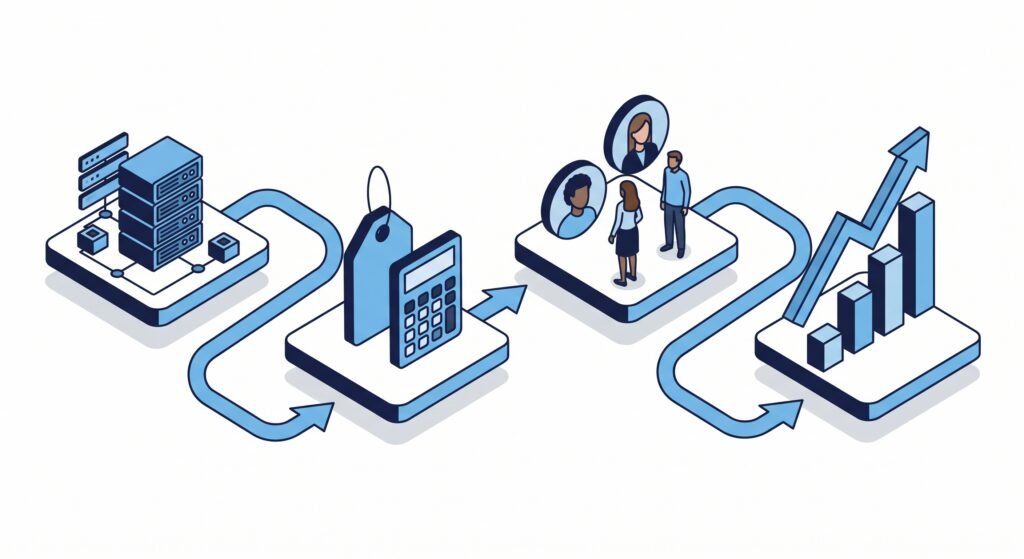
A reseller in the UK last year bought into a wholesale IPTV panel for £180, spent two weekends setting up a basic website and a Telegram support channel, and had 40 paying customers within six weeks. By month four he had 200. His wholesale cost per subscription was around £2.50. He was billing customers £12 a month. Do the math.
That margin is why so many people are asking how to start an IPTV reseller business right now — and why the ones who approach it without understanding the real mechanics tend to burn out before they hit month three. This article is not going to pretend the business is simple.
It is going to give you the actual picture: the setup costs, the margin structure, the legal exposure, the failure modes, and the operational decisions that separate resellers who scale from resellers who quietly disappear. If you want the glossy version, there are plenty of those elsewhere. This is the version written for someone who wants to actually build something.
Understanding the IPTV Reseller Business Model Before You Spend a Penny
Before anything else, get the commercial logic straight in your head. Understanding the IPTV reseller business model at a fundamental level matters more than any panel tutorial or marketing trick, because every downstream decision — pricing, supplier selection, customer targeting — flows from it.
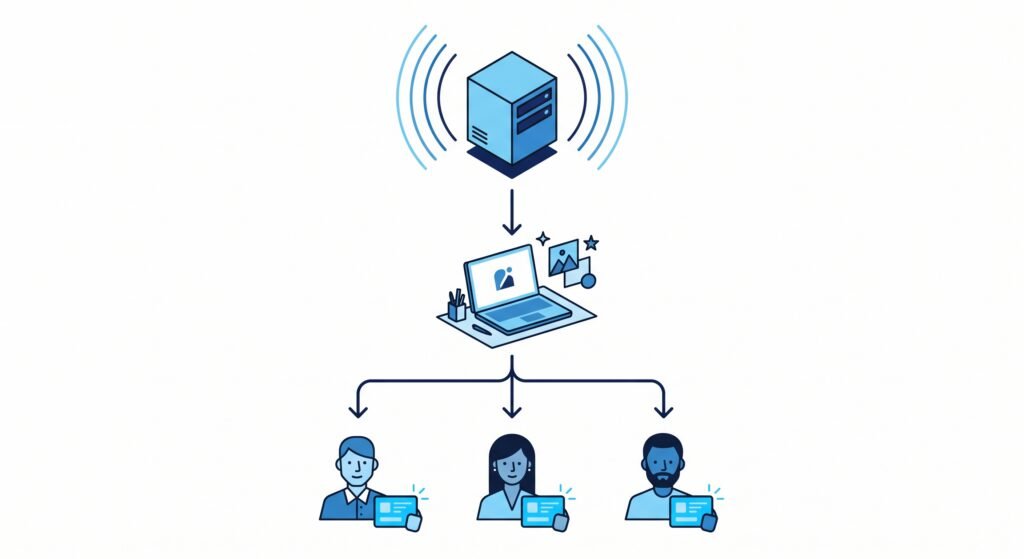
Here is the core structure. A wholesale IPTV supplier operates server infrastructure that delivers live channels, VOD libraries, and catch-up content over internet protocol. How IPTV technology works at the protocol level is worth understanding at least at a surface level, because it directly affects the quality complaints you will field from customers. The supplier sells access to that infrastructure in bulk, usually in the form of subscription credits. You buy those credits at a wholesale rate, activate subscriptions for end customers through a reseller panel, and charge those customers a retail price. The difference is your revenue. Your costs are the wholesale credits plus whatever you spend on your own business infrastructure.
What makes this attractive compared to most digital reseller models is the margin structure. A wholesale credit that costs you $3 to $5 can legitimately retail for $10 to $20 depending on your market and how you position the service. That is a 3x to 6x markup. Most resellers starting out leave significant margin on the table by underpricing, which we will cover in the pricing section.
There is also a tiered structure worth understanding. Most suppliers offer three levels: the supplier themselves at the top, resellers in the middle, and end customers at the bottom. Some suppliers add a sub-reseller tier, where an established reseller can onboard other resellers beneath them and take a cut of their volume. This is sometimes called a multi-tier or master reseller arrangement. It sounds appealing but it adds complexity — you are now responsible for the service quality experienced by customers you have never spoken to. Most people starting out should ignore the sub-reseller angle until they have a stable base of direct customers.
The global IPTV market size and growth projections suggest consistent expansion through the late 2020s, driven by cord-cutting and the continued fragmentation of traditional broadcast. That context matters: you are entering a market with genuine demand growth, not a contracting one.
The Legal Landscape: What You Actually Need to Know Without the Disclaimers
This is the section most guides skip entirely, which is exactly why it belongs here before anything operational. The legal risk in IPTV reselling is real. It is also manageable if you understand it clearly rather than ignoring it or panicking about it.
The fundamental issue is content licensing. Television channels and VOD content are distributed under license agreements. A legitimate IPTV service — the kind operated by telecoms companies and platforms like BT TV, Sky, or IPTV services through official app stores — holds those licenses. Many wholesale IPTV suppliers operating in the grey or black market do not. They aggregate content without holding the rights to distribute it. When you resell that content to customers, you are the visible face of that transaction. The supplier is often anonymous. You are not.
You are not required to hold a broadcast license yourself as a reseller. But you are responsible for the compliance of your supply chain in most jurisdictions. The EU audiovisual media services directive and reseller obligations make this explicit for European operators. Similar frameworks exist in the UK under Ofcom regulation and in the US under FCC and copyright law.
What Due Diligence Actually Looks Like
Asking a supplier “are you licensed?” is not due diligence. Any supplier will say yes. Actual due diligence means asking for documentation: which content rights do they hold, in which territories, and for which channel categories. A legitimate operation can answer this. One that cannot — or deflects with vague reassurances — is a red flag you should take seriously.
Other red flags at the supplier evaluation stage: no company registration details anywhere on their site or in their terms, payment accepted only in cryptocurrency with no alternative, support that disappears when you ask pointed questions about compliance, and pricing that is so low it makes no commercial sense for a licensed operation. If a supplier is offering you credits at $0.50 per subscription, they are not licensing content. Someone is paying for that content and it is not them.
The practical advice here: treat supplier compliance as a commercial risk factor, not just a moral one. A supplier operating without licenses is also operating without the stability that comes from legitimate business relationships. They are more likely to disappear, go offline, or get taken down. Your customers lose service, you lose revenue, and you potentially face chargebacks and reputational damage all at once.
How to Start an IPTV Reseller Business?
Nobody in the top search results gives you actual numbers. Here they are, based on what resellers in active communities report spending.
Your primary startup cost is the wholesale credit package. Entry-level packages from most wholesale suppliers start between $50 and $150 for a bundle of 25 to 50 credits. Mid-tier packages in the $150 to $300 range typically give you 100 to 200 credits with a better per-unit cost. Some suppliers require a minimum monthly spend to maintain panel access — usually in the $30 to $100 range — which is worth factoring in as a fixed cost before you have enough customers to cover it.
Beyond credits, your business infrastructure costs are relatively modest:
- Domain registration: $10 to $15 per year
- Web hosting (shared or managed WordPress): $5 to $20 per month
- Payment processing setup: typically 2% to 3.5% per transaction plus monthly fees if you use a merchant account rather than a payment link service
- Basic branding (logo, brand assets): $0 if you do it yourself with Canva, $50 to $150 if you outsource
- Customer support tooling (help desk or ticketing): $0 using free tiers of tools like Freshdesk or Tidio at low volume
Realistic total to launch: under $500 in most cases, and under $300 if you are careful. This is genuinely low compared to most business models. The tradeoff is that the barrier to entry being low means competition is significant. You are not buying into scarcity. You are buying into a market where your differentiation has to come from service quality, reliability, and how you handle customers — not from unique access to content.
Break-even math at a basic level: if your fixed monthly costs including minimum credit spend and hosting are $120, and your margin per customer is $8 after wholesale cost, you need 15 customers to cover fixed costs. Most resellers can hit that within the first four to six weeks if they are actively finding customers rather than waiting for them.
Choosing Your Wholesale Supplier
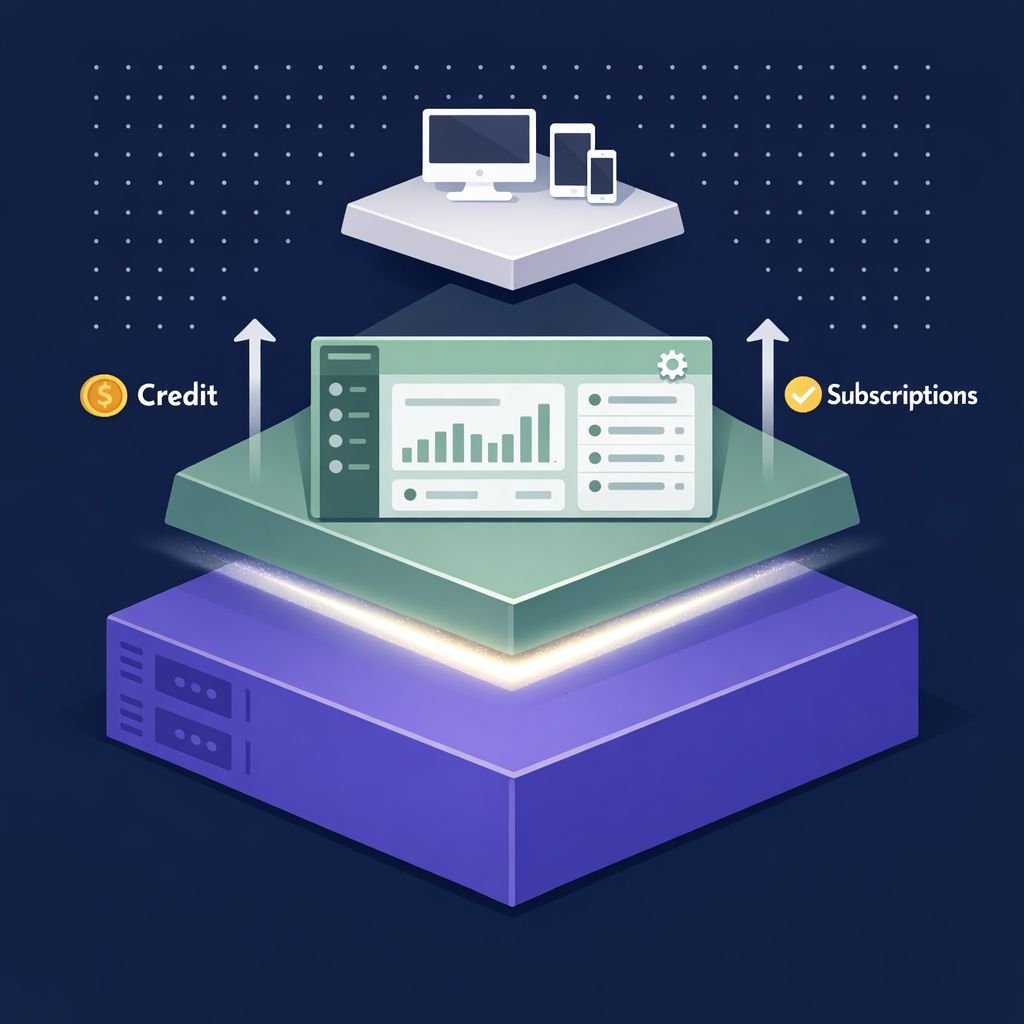
The supplier relationship is the single most consequential decision you will make. A bad supplier does not just mean occasional buffering complaints. It means customers leaving, refund demands, and the erosion of whatever reputation you have built. The full process for how to evaluate and choose a wholesale IPTV supplier deserves dedicated attention, but here are the commercial criteria that matter most at the initial selection stage.
Server Stability and Uptime Track Record
Any supplier will claim 99.9% uptime. Almost none of them can prove it. What you want is verifiable track record from other resellers who have used the service for more than three months. Look for active reseller communities on forums, Discord servers, and subreddits where real resellers discuss real experiences. A supplier that gets consistently mentioned for going down during major sports events — which is when your customers are most likely to be watching and most likely to complain — is a supplier you want to avoid regardless of how good the pricing looks.
Ask for a trial before committing meaningful spend. Most legitimate wholesale suppliers will give you a 24 to 48-hour test line at no cost. Use it across different device types, at different times of day, and specifically during high-demand content windows. If a supplier refuses to provide a test line, walk away.
Panel Features and Technical Flexibility
The reseller panel is your operational interface for everything: creating subscriptions, managing renewals, monitoring active connections, and handling customer issues. Understanding the difference between M3U vs panel: which wholesale model suits your setup is important here because not all wholesale arrangements give you a full panel. Some suppliers issue M3U playlists directly, which gives you less control and makes customer management significantly harder at scale.
A proper reseller panel should let you set your own subscription durations, generate Xtream Codes and M3U output for customers, see active connection counts, and suspend or terminate individual lines. If a panel does not give you these basics, managing more than 30 or 40 customers becomes genuinely painful.
Content library depth and quality matters too, but be realistic about what you are evaluating. Most wholesale suppliers in the same price bracket are pulling from similar aggregated sources. The differentiation is usually in uptime reliability and anti-freeze technology rather than exclusive content.

Pricing Your Service: Don’t Destroy Your Margins
Most new resellers set their price at $10 per month and hit 40% monthly churn before they understand why. The price is not the problem. The positioning is. They are pricing against the cheapest option they can find online rather than against the value they are actually delivering — which includes reliability, support availability, and the confidence that the service will still be there next month.
The detailed mechanics of how to price your IPTV subscriptions for maximum margin covers this fully, but the core principle is this: your price signals quality in a market where customers have been burned before. A customer who has had three cheap IPTV services go offline in a year is not primarily looking for the cheapest option. They are looking for the most reliable one. Pricing at $15 to $20 per month in a market where most unbranded resellers are at $8 to $10 is not a disadvantage if your positioning communicates reliability and support.
Longer subscription terms are your most powerful margin tool. A customer paying $12 per month month-to-month is fine. A customer paying $100 upfront for a year is better in three ways: you collect cash now, you reduce the administrative overhead of monthly renewals, and you dramatically reduce the chance of that customer churning in month two because they had a bad week of buffering. Offer a meaningful discount for annual commitments — 20% to 30% off the monthly equivalent rate — and push it as your primary offer rather than a buried option.
Device limits are another lever most new resellers ignore. Offering one simultaneous connection as standard and charging for additional connections is a legitimate upsell that many customers will take without hesitation. A household with two TVs, a tablet, and a phone will pay an extra $3 to $5 a month for two connections without questioning it. That is pure margin with no additional wholesale cost if your supplier charges per subscription rather than per connection.
Finding and Keeping Customers
The technical setup is the easy part. Customer acquisition is where most new resellers stall. The full breakdown of proven channels for finding your first IPTV customers goes into specific tactics, but the strategic point worth making here is that your first 20 to 30 customers will almost certainly come from your personal network and from direct outreach, not from SEO or paid ads.
This is not a limitation. It is an advantage. Personal network customers have a higher trust baseline, which means lower churn. They also refer other customers when they are happy, and word of mouth in IPTV is genuinely powerful because the market is driven by peer recommendation. Someone who found a reliable IPTV service tells their friends. That referral loop, once started, compounds.
Retention Is More Valuable Than Acquisition
At the margins typical in IPTV reselling, a customer who stays for 18 months is worth roughly 6x the lifetime value of a customer who churns after three months. The economics of retention are dramatically better than the economics of acquisition once you have a base to work with.
Churn in IPTV is driven by a small number of causes: buffering and reliability issues (usually supplier-side), poor support response when something goes wrong, and customers who were never properly onboarded and do not know how to use the service properly. The first is your supplier selection problem. The second and third are yours to fix.
Set up a proper onboarding flow. When a customer activates, send them a clear setup guide for the device they told you they are using. Give them a direct contact method — Telegram, WhatsApp, or email — with a realistic response time you can actually meet. Most IPTV customers have had the experience of a reseller going silent when something breaks. Being the reseller who actually responds within a few hours is a genuine competitive differentiator in this market.
Proactive communication matters too. If your supplier has a scheduled maintenance window or you know a major sports event is coming up that might strain the servers, message your customers in advance. It sets expectations, reduces panic, and signals that you are a professional operation rather than someone running a side hustle from their phone.
Scaling Beyond Solo: When and How to Grow the Operation
Most resellers who stick with the business hit a ceiling around 80 to 120 customers where the time cost of manual customer management starts to eat into the profitability. This is the point where you either systematize or plateau.

Systematizing means two things: automating the repetitive parts and improving the infrastructure that serves customers without your direct involvement. On the automation side, a properly configured website with a payment gateway and automatic subscription provisioning can handle the entire new customer flow without you touching it. Platforms like WHMCS with an IPTV module, or dedicated reseller storefronts that integrate directly with your supplier panel, can reduce the time cost of onboarding a new customer from 15 minutes of manual work to essentially zero.
On the infrastructure side, this is the point where investing in a better-quality supplier or a backup supplier starts to make economic sense. When you have 100 customers paying $15 a month, a 12-hour outage costs you in support time, refund requests, and churn. Spending $50 a month on a backup line from a second supplier to cover major outages is a rational business decision at that scale. It is not rational at 20 customers.
The sub-reseller route is worth revisiting at this stage if your supplier supports it. If you have built a reliable operation and developed real knowledge of the market, you can offer reseller access beneath you to people who want to start out but lack your experience. You take a margin on their volume, they benefit from your supplier relationships and guidance. This is how the most successful independent IPTV operators have built businesses that generate five figures a month — not from direct customer volume alone, but from a combination of direct customers and a small network of sub-resellers they support.
One warning: do not rush into sub-reselling. Every sub-reseller you onboard is a potential support burden and a potential reputational risk. A sub-reseller who provides poor service to their customers reflects on your supplier relationship and potentially on your brand if there is any overlap in customer communities. Vet them as carefully as you would vet a supplier.
Frequently Asked Questions
How much does it cost to start an IPTV reseller business?
Most resellers start by purchasing a wholesale credit package from a supplier, typically ranging from $50 to $300 for an entry-level bundle. Add domain, hosting, and basic tools and your realistic startup cost is under $500 in most cases.
Do I need a license to resell IPTV services?
You are not required to hold a broadcast license yourself, but you are responsible for ensuring your supplier holds the rights to distribute the content they provide. Reselling through an unlicensed provider exposes you to legal liability. Always verify supplier compliance before signing up.
How do IPTV resellers make money?
Resellers buy subscription credits from a wholesale supplier at a low per-unit cost, then sell those subscriptions to end customers at a higher retail price. The difference is your margin. Profit scales as your customer base grows without proportional increases in cost.
What is an IPTV reseller panel?
A reseller panel is a web-based dashboard provided by your wholesale supplier. It lets you create, manage, and suspend customer subscriptions, generate M3U lines or Xtream codes, and monitor usage -- all without needing technical infrastructure of your own.
How long does it take to set up an IPTV reseller business?
The technical setup -- choosing a supplier, activating a panel, and configuring your first test lines -- can be completed in a single day. Building a brand, website, and acquiring your first paying customers typically takes two to four weeks of focused effort.