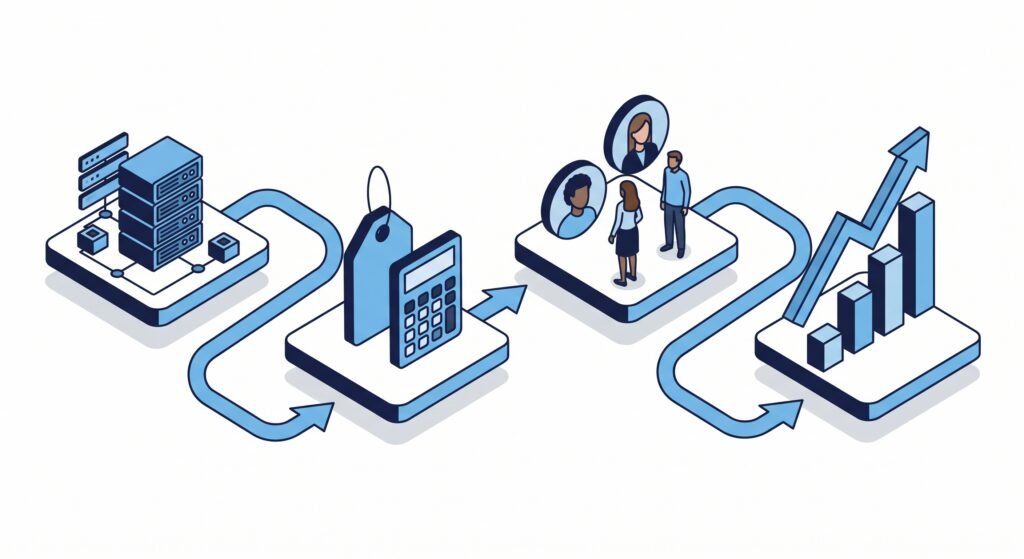
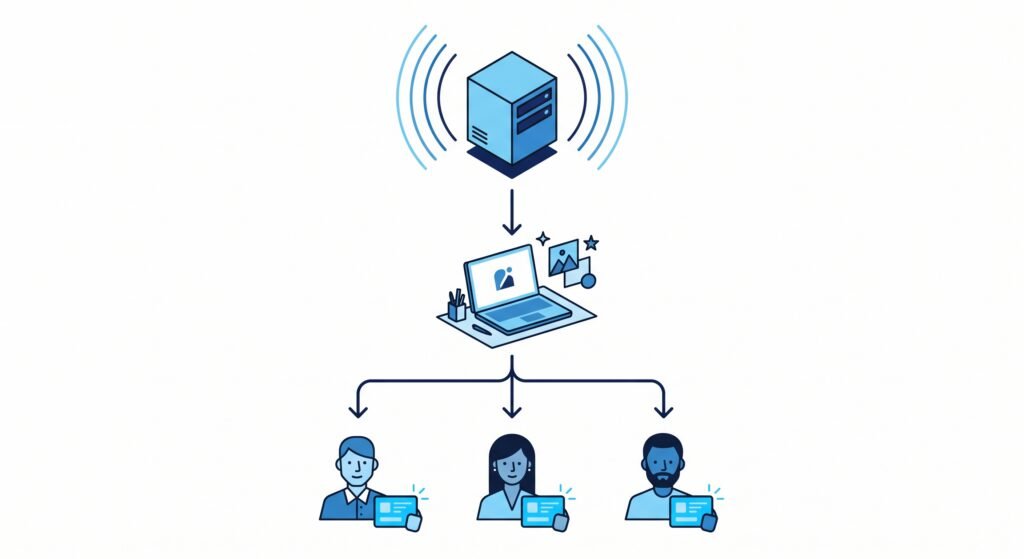
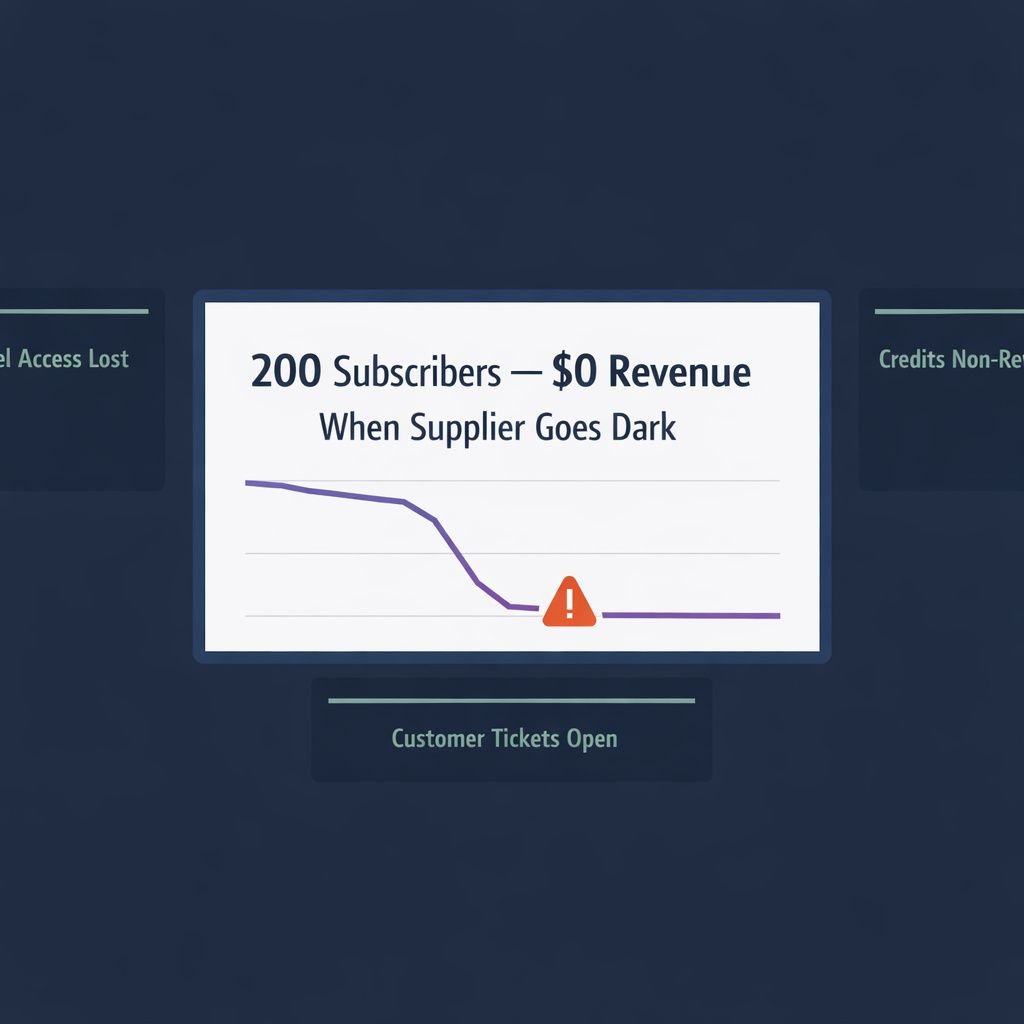
A supplier you have been running 200 subscribers through goes dark on a Tuesday morning. No warning, no email, no refund. Your panel stops responding, your customers start opening tickets, and you are holding credits you can no longer use. This is not a hypothetical. It happens regularly in this industry, and it is the kind of scenario nobody in a standard “how to make money with IPTV” article ever prepares you for. Before you get to that point, you need to understand exactly what the IPTV reseller model is, how the money actually moves, and what you are and are not responsible for in the chain. That understanding starts with knowing the full structure of the business — not just the part where you collect $15 a month from customers.
The Supply Chain Nobody Explains: Where Content Actually Comes From
Most explainers skip straight to the reseller layer without ever telling you what sits above it. That is a problem, because if you do not understand the chain, you cannot evaluate suppliers intelligently or explain service issues to customers when things break.
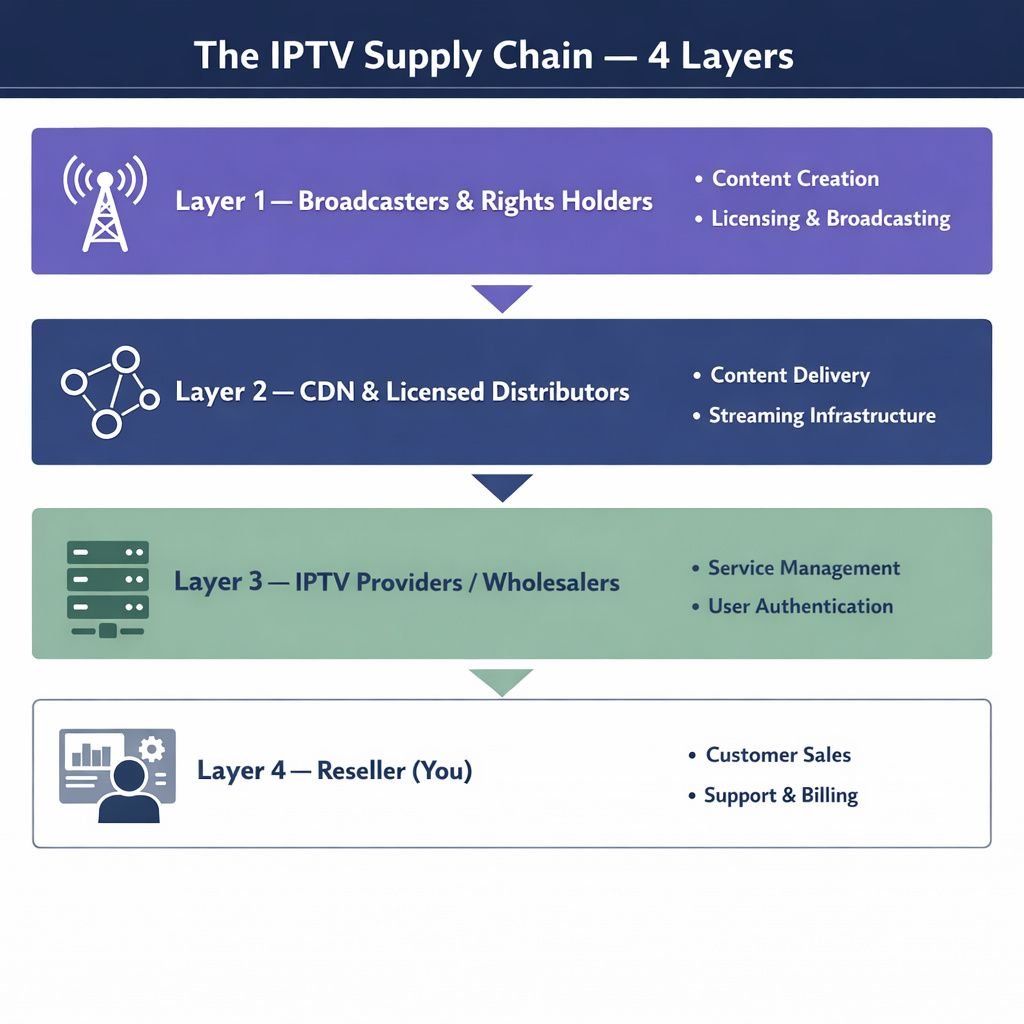
The chain has four layers. At the top are broadcasters and content owners — sports rights holders, news networks, movie studios. They distribute their signals through licensed distributors and CDN (content delivery network) providers. Below that sit IPTV providers, sometimes called wholesalers or upstream suppliers. These operators run the actual server infrastructure: the transcoding equipment, the storage, the playout systems. They acquire streams through a combination of legitimate licensed feeds and, in many cases in this industry, unlicensed rebroadcasts. That is the legal reality of the market and you should understand it clearly before entering. For a broader look at how IPTV streaming infrastructure works, Muvi covers the technical architecture in reasonable depth.
Below the provider sits the reseller. That is you. You do not own servers. You do not transcode content. You do not maintain stream sources. You buy access to the provider’s existing infrastructure and sell subscriptions to end users at a markup. The end user sits at the bottom of the chain, watching on their Fire Stick, Android box, or Smart TV.
Understanding this structure matters for one practical reason: your service quality is entirely dependent on what happens two layers above you. When streams buffer, when channels drop, when a sports event fails to load — that problem originates at the provider level, and you have no direct control over it. You are the one fielding the support ticket. The global OTT and IPTV market growth data shows why this space keeps attracting new entrants, but the supply chain risk is what keeps thinning the herd.
Every reseller operation is only as stable as its supplier. That single fact should shape every decision you make about which wholesale partner to work with, how many credits to hold at once, and whether you maintain backup supplier relationships. Most people learn this the hard way. You do not have to.
How the Credit System Works and Where Your Margin Lives
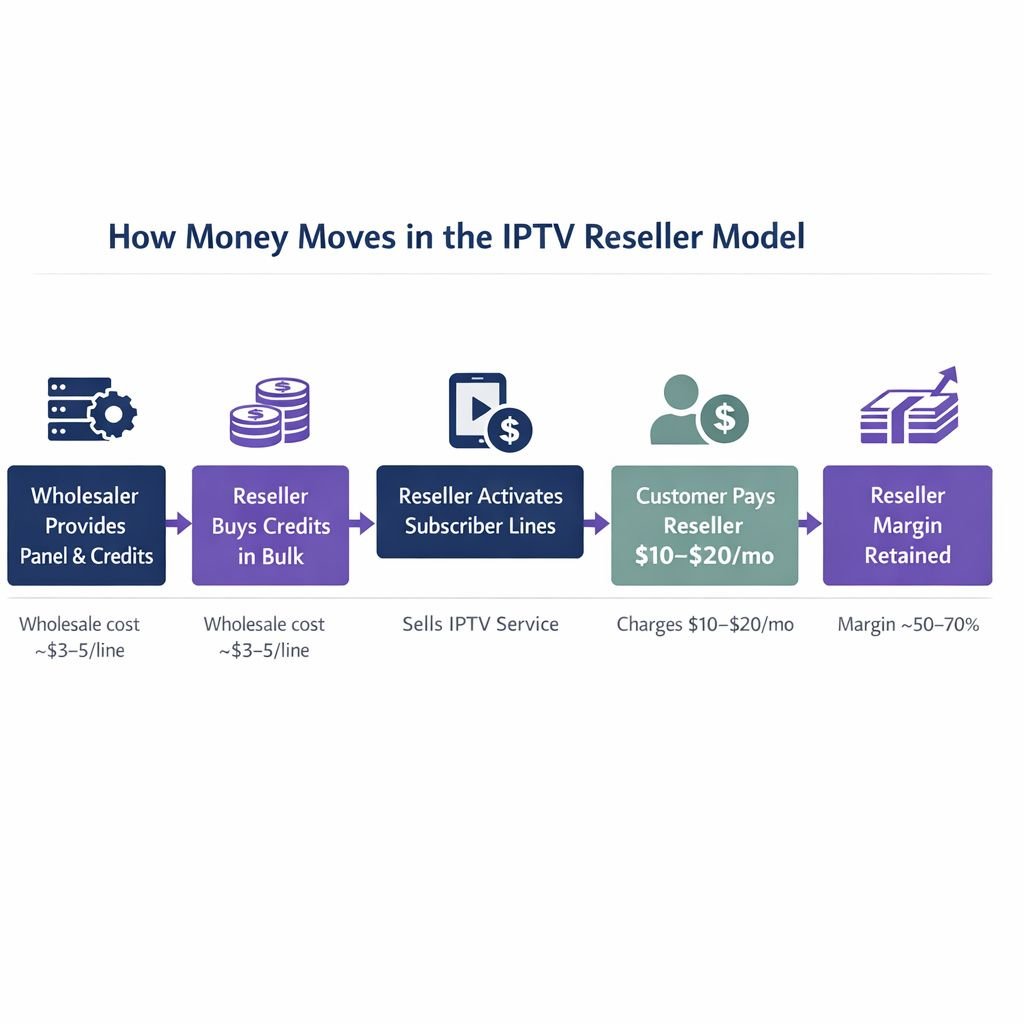
The credit system is the core mechanic of panel-based IPTV reselling, and it is straightforward once you see it written out plainly. You purchase a block of credits from your wholesale supplier. One credit equals one month of active service for one end user. When a customer subscribes, you assign them an account and deduct one credit per month from your balance. When their subscription renews, another credit is consumed.
Wholesale credit cost across the industry typically runs between $2 and $3 per credit. A common example: you buy 100 credits at $2.50 each, paying $250 upfront. You set your retail price at $15 per month. Each active subscription generates $12.50 in gross margin. With 50 active subscribers at that rate, you are generating $625 per month in gross profit before any operating costs.
The math is clean. The execution is where it gets complicated. If you want to go deeper on the actual numbers, including how churn and credit wastage affect your real returns, read through how to calculate your IPTV reseller profit margin — it covers the variables that most surface-level guides ignore entirely.
What Happens to Credits When a Customer Cancels
This is the part most newcomers do not ask about until it costs them money. Credits are generally non-refundable once assigned to a user account. If a customer pays for one month, you assign a credit, they use two weeks of service, then dispute the charge with their bank — that credit is gone. You eat the wholesale cost and lose the chargeback fee on top of it. Some suppliers allow credit recovery on unused accounts that were never activated, but once a line is active, the credit is consumed regardless of what the customer does afterward.
This is why your pricing and cancellation terms matter from day one. Pricing yourself at $10 per month with a $2.50 wholesale cost looks like a $7.50 margin until you factor in a 20% monthly churn rate, occasional chargebacks, and the credits you burn on trial accounts. Thin retail pricing is one of the most common reasons early-stage resellers stall out before hitting 100 subscribers.
The IPTV Reseller Panel: What You Actually Control
The reseller panel is your operational interface. It is provided by your upstream supplier, runs in a web browser, and requires no technical knowledge to use at a basic level. Through the panel you create user accounts, set subscription durations, assign connection limits, monitor who is actively streaming, and reset credentials when customers get locked out.
From the customer’s perspective, none of this is visible. They see only the brand you present to them. You choose your business name, your support channels, your pricing structure, and your terms. The supplier’s name never appears. This is what people mean when they say resellers operate under a white-label model — your upstream infrastructure is invisible to your end users.
Panel features vary between suppliers, but the core functions are consistent. Most panels show you a live connection count, a credit balance, and a subscription expiry list so you can see which accounts are about to lapse. Some panels include automated renewal reminders or allow you to set up trial accounts with a fixed duration. For a full walkthrough of the technical side of running a panel, the IPTV reseller technical setup explained guide covers the practical configuration steps in detail.
Panel-Based Credits vs. M3U Bulk Playlists: Two Different Models
Not all wholesale IPTV purchasing works through a panel and credit system. Some suppliers sell access through M3U playlists — a URL that contains a list of stream sources a customer loads directly into their player app. As a reseller working with M3U, you purchase a bulk playlist license and distribute individual M3U lines to customers, typically with a markup on each line.
The two models have meaningfully different operational profiles. Panel-based reselling gives you more control: you can suspend accounts, reset passwords, monitor usage, and manage renewals centrally. M3U distribution is simpler to start but harder to manage at scale — you have limited visibility into who is using what, and revoking access is less clean. If you are deciding which approach fits your setup, M3U vs IPTV panel: which wholesale model works better breaks down the operational tradeoffs directly.
The credit-based panel model is the more scalable structure for anyone trying to build a real subscriber base. M3U bulk distribution tends to suit lower-volume operators or those testing a new supplier before committing to a panel agreement.
What You Are Responsible For (and What You Are Not)
This is the part of the business model that gets glossed over in every beginner guide. People read “low startup cost, no servers required” and assume the operational burden is light. The infrastructure burden is light. The customer-facing burden is not.
You are responsible for customer acquisition. Your supplier does not bring you customers. You build your own audience through whatever channels you choose — social media, word of mouth, online communities, paid ads. Most new resellers underestimate how much time this takes before a subscriber base generates meaningful recurring revenue.
You are responsible for first-line customer support. When a customer’s stream buffers, they contact you. When an app stops working after an update, they contact you. When a channel they watch every night disappears from the lineup, they contact you. You cannot pass them directly to the supplier. AlphaOTT’s guidance on reselling correctly notes that a competent reseller needs enough technical understanding to troubleshoot common streaming issues — buffering, app configuration, device compatibility — without escalating every ticket upstream. That knowledge takes time to build, but it directly affects your churn rate.
You are responsible for payment processing. This is a genuine operational challenge. Standard payment processors — Stripe, PayPal, standard merchant accounts — routinely flag and terminate accounts operating in the IPTV space. You need to solve this problem before you have 50 customers expecting a recurring billing system. Many resellers use cryptocurrency, direct bank transfer, or specialist high-risk processors. Each has tradeoffs in conversion rate and customer friction.
What you are not responsible for: stream uptime at the infrastructure level, channel lineup changes, server capacity during peak events. Those live with your supplier. Your job is to choose a supplier whose infrastructure is reliable enough that you are not constantly apologising for outages. Knowing how to choose a wholesale IPTV supplier before you commit to one is worth more than any other preparation you can do.
Why People Enter the IPTV Reseller Business and What the Real Margins Look Like
The appeal is straightforward. Low startup capital, no physical inventory, recurring monthly revenue from a subscriber base, and the ability to operate from anywhere. For someone who can build an audience and manage customer relationships, the economics are genuinely attractive compared to most small business models.
The realistic margin picture: wholesale credits at $2.50, retail at $15, gives you $12.50 gross per subscriber per month. A base of 100 active subscribers generates $1,250 per month in gross profit. Scale to 300 subscribers and you are at $3,750 per month. These are gross figures — subtract payment processing fees, any advertising spend, and the time cost of support. But the unit economics are strong if you keep churn low and maintain a reliable supplier relationship.
The churn problem is the one that kills most early-stage operations. Most new resellers set their price at $10, attract price-sensitive customers, and hit 40% monthly churn before they understand why. Price-sensitive customers are the hardest to retain because the moment a cheaper option appears or a stream has a bad week, they cancel. Building a subscriber base around service quality and responsiveness — rather than competing on price — produces materially better retention numbers over time.
The other reality: this business rewards operators who treat it like a business. That means understanding your numbers, vetting your supplier before committing significant credit spend, having a backup supplier ready, and building customer communication systems that do not depend on you being available at 11pm on a Saturday. If you are ready to look at the full operational picture, the guide on how to start an IPTV reseller business covers the practical setup steps from supplier selection through to your first paying customers.
The market itself is not shrinking. Cord-cutting continues to accelerate globally, and demand for affordable multi-channel streaming alternatives keeps growing. The operators who build durable businesses in this space are the ones who understand the model completely before they start spending money on credits.
Frequently Asked Questions
What is an IPTV reseller?
An IPTV reseller buys access to a provider’s streaming infrastructure at wholesale cost and sells subscriptions to end users at a markup. They do not own servers or content. They operate independently under their own brand, and the upstream supplier remains invisible to the end customer.
How does the IPTV reseller credit system work?
You purchase credits from a wholesale supplier, where one credit typically equals one month of service for one user. Wholesale cost is usually $2 to $3 per credit. You set your own retail price — commonly $10 to $15 — and keep the difference as your margin on every active subscription each month.
What is an IPTV reseller panel?
A reseller panel is a dashboard provided by your upstream supplier. It lets you create and manage user accounts, set subscription lengths, monitor active connections, and control pricing. No technical or server knowledge is required to operate it.
How much does it cost to start as an IPTV reseller?
Startup costs are low compared to most businesses. You typically buy a credit bundle upfront — sometimes as few as 10 to 25 credits — which can cost under $100. There are no servers to maintain and no content licensing fees. Your main cost is the wholesale credits you purchase from your supplier.
What profit margin can an IPTV reseller make?
If wholesale cost is $2.50 per credit and you charge customers $15 per month, your gross margin is $12.50 per subscription per month. With 50 active subscribers that is $625 per month in gross profit. Actual margins depend on your retail price, supplier rates, and churn rate.