
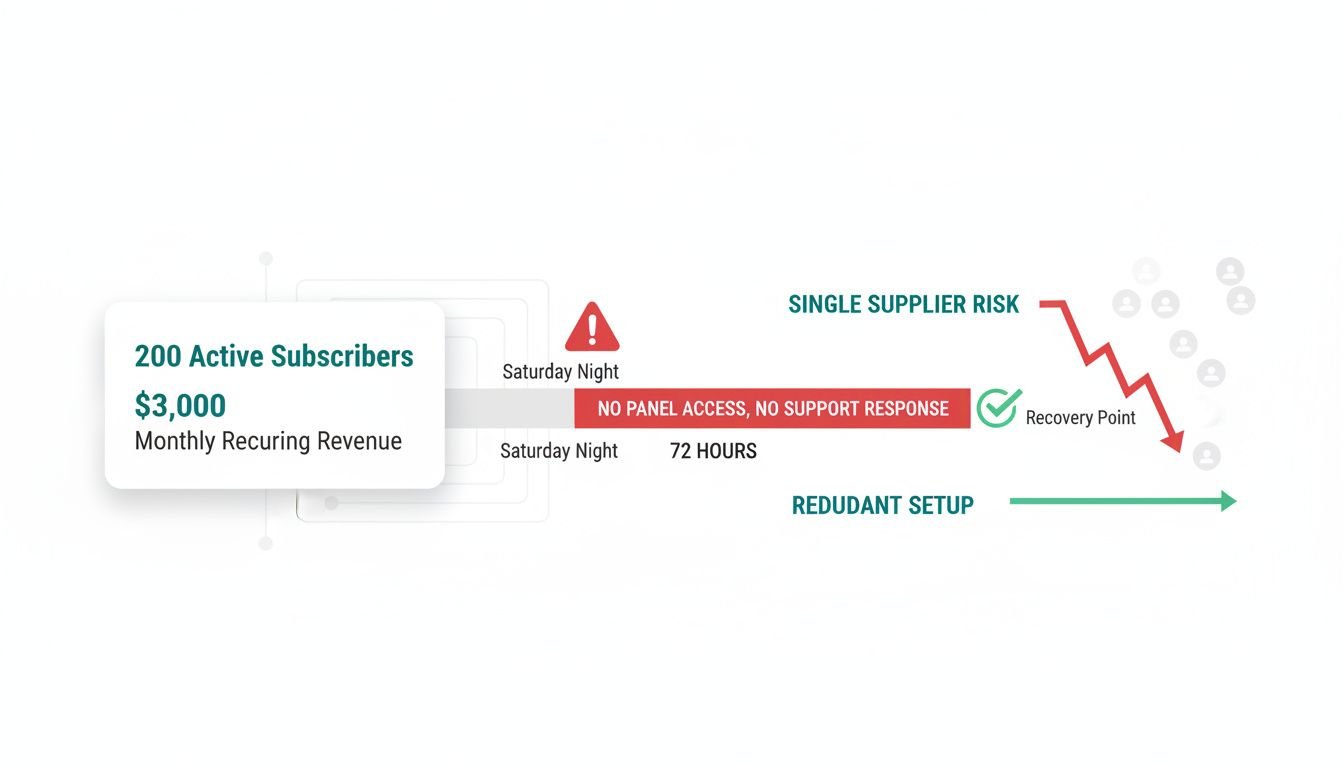
A reseller running 200 active subscribers at $15 per month looks like they are printing money until their supplier goes dark on a Saturday night and they spend the next 72 hours fielding refund demands with no panel access and no support ticket response. That scenario played out dozens of times in 2024 and 2025, and it will happen again in 2026 to resellers who built their entire operation on a single source without understanding what the broader market shift means for supplier stability.
The IPTV reseller industry in 2026 landscape is not just bigger than it was three years ago — it is structurally different, and those structural differences change what good business decisions look like at every level from pricing to supplier selection to customer retention.
The Market Size Numbers Are Real, But You Need to Read Them Carefully
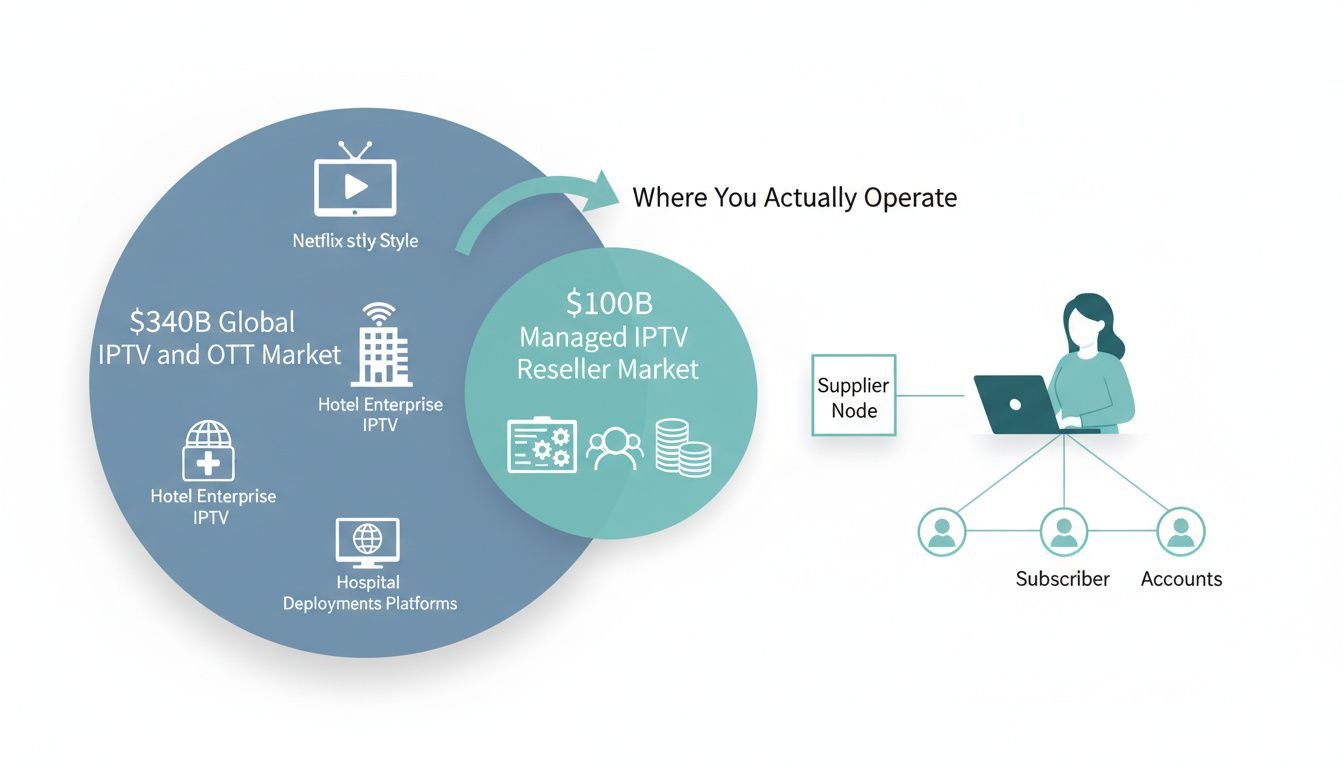
Two figures keep circulating in IPTV industry coverage right now. One puts the global IPTV and OTT market at approximately 340 billion dollars by 2026. Another says the IPTV market alone is approaching 100 billion dollars. Both numbers get dropped into articles as authority signals without any explanation of why they are so different, and that lack of explanation is actually a problem for anyone trying to make real business decisions.
The 340 billion dollar figure comes from the combined IPTV and OTT market, which includes subscription video on demand platforms like Netflix and Disney+, live streaming services, enterprise IPTV deployments in hotels and hospitals, and the full ecosystem of video delivery over IP networks. You can check global IPTV and OTT market forecast data from Statista and see exactly how broadly that category is drawn. The 100 billion dollar figure is narrower — it refers specifically to IPTV services delivered over managed or semi-managed networks, which is the category that includes the wholesale panel-based reseller model most of you are actually operating in.
The practical implication is this: you are not competing with Netflix for market share. You are operating in a specific segment of a much larger market, and that segment is growing because it serves a real need that legitimate streaming platforms are not meeting — specifically, live sports, international content, and linear TV channels at a price point that traditional pay-TV providers cannot match.
The growth is real. Cord-cutting trends and pay-TV subscriber decline have been accelerating consistently, and that acceleration directly expands your addressable customer base. Every household that cancels a cable subscription is a potential IPTV customer. The question is whether you are positioned to capture them or whether you are still running a price-race-to-the-bottom operation that cannot survive a supplier disruption or a payment processor freeze.
What FAST Channels and Linear-Streaming Convergence Actually Mean for an IPTV Reseller Industry in 2026 Operation
Free Ad-Supported Streaming TV — FAST channels — has been the fastest-growing segment of the streaming market for the past two years. Platforms like Pluto TV, Tubi, and Peacock’s free tier are pulling millions of viewers who want scheduled, linear-style TV without a subscription fee. The FAST channel growth and streaming market convergence story is not just about big platforms. It has direct implications for how resellers position their product.
Here is the dynamic worth understanding: FAST channels are training a new generation of viewers to expect linear TV over an internet connection. That is not a threat to your business model. It is a market education event happening at scale and at someone else’s expense. When a viewer gets comfortable watching scheduled channels on Pluto TV, the mental barrier to paying for a full IPTV subscription drops significantly. Your pitch becomes easier, not harder.
Why Convergence Changes Your Customer Conversation
The old customer objection was “I don’t understand how IPTV works.” That objection is fading. The new objection is “I already get free channels through Tubi — why would I pay you?” That is a better objection to handle because it has a specific answer: sports, premium live events, international channels, and a channel count that no FAST platform is going to touch. If your supplier package includes those elements and your pricing reflects the value, you win that conversation. If you are trying to compete on price with a free service, you have already lost before you started.
The convergence trend also means that more mainstream consumers are entering the IPTV space as customers. That is different from the early adopter and tech-savvy customer base that most resellers built on. Mainstream customers need more support, have less tolerance for buffering, and will churn faster if the product experience is inconsistent. Factor that into your supplier evaluation. A panel that works fine for a technically comfortable user will generate support tickets constantly from a mainstream household.
Supplier Stability in a Growing Market
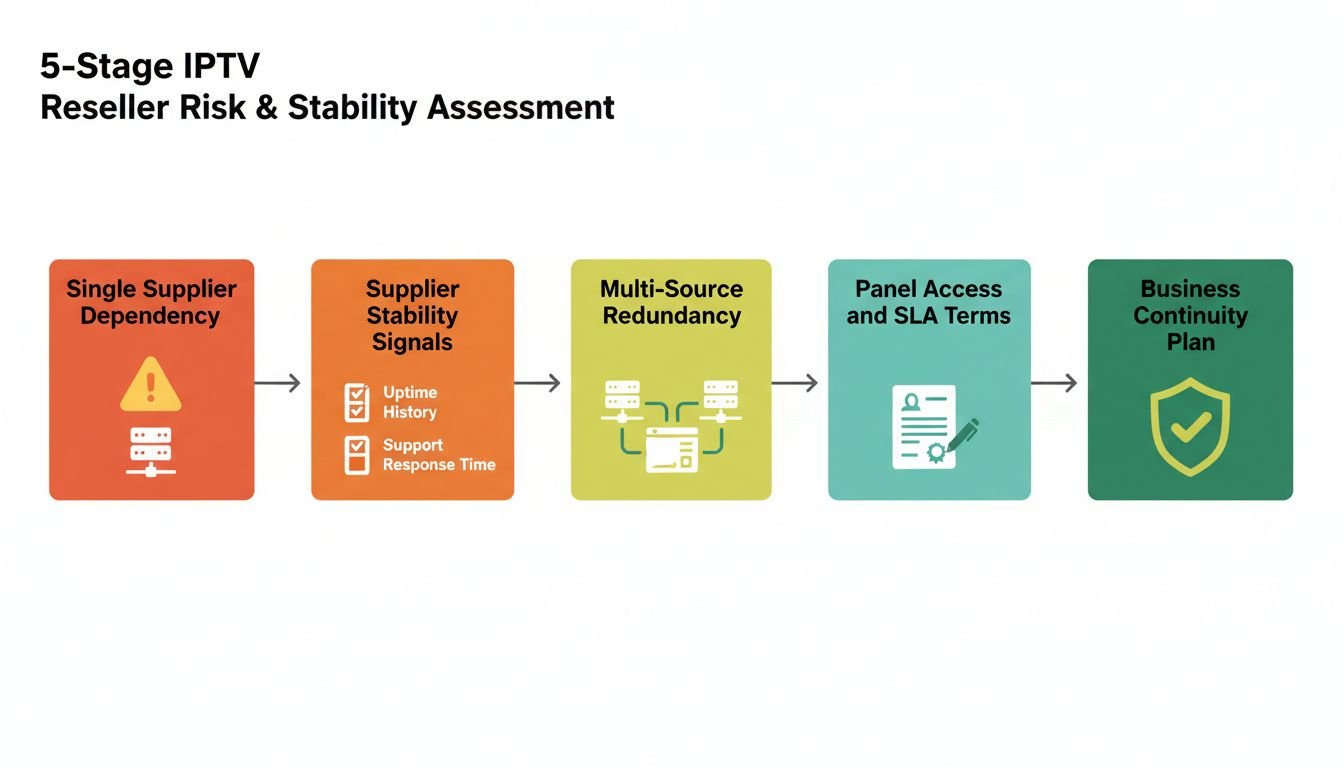
More market demand also means more suppliers entering the wholesale space with under-built infrastructure. A growing IPTV reseller in 2026 market attracts opportunistic suppliers the same way any expanding market does. The discipline required when evaluating a new wholesale source has not decreased — it has increased. If you are not already doing structured supplier vetting, the guide on how to choose a wholesale IPTV supplier covers the specific checkpoints worth running before you move customers onto any new panel.
The Margin Reality: Where Most Resellers Are Leaving Money or Losing It
The numbers that circulate in IPTV forums and pitch decks tend to look like this: buy credits at 6 to 8 dollars each, sell subscriptions at 15 to 25 dollars per month, pocket the difference. At face value, that looks like a 100 to 300 percent margin. In practice, most new resellers set their price at $10 — undercutting everyone to acquire customers — and hit 40 percent monthly churn before they understand why their revenue is not growing despite adding new subscribers every week.
The churn problem is where the margin math breaks down. If you are replacing 40 percent of your subscriber base every month, you are not running a recurring revenue business. You are running a churn-funded acquisition treadmill. The acquisition cost of a new IPTV customer — even through organic social or word of mouth — is not zero. Your time has a cost. Your trial credits have a cost. Your support hours have a cost. When you price at $10 and churn at 40 percent, those costs eat the theoretical margin completely.
The resellers actually making $2,000 to $10,000 per month in this space are not doing it through volume at low prices. They are doing it through retention at sustainable prices. A subscriber base of 150 customers paying $18 per month with 8 percent monthly churn generates more net revenue over a 12-month period than 400 customers paying $10 with 35 percent churn. The math is not close. If you want to build that kind of operation, understanding how to calculate your IPTV reseller profit margin properly — including churn, support costs, and credit wastage — is not optional.
The 2026 market context makes this more relevant, not less. As the customer base expands to include more mainstream households, price sensitivity actually decreases for customers who are comparing you to a cable bill. A household that was paying $120 per month for cable is not going to balk at $18 for IPTV. They are going to balk at buffering and poor support. Price yourself accordingly and compete on reliability and service quality rather than racing to the bottom.
Legal and Regulatory Pressure Is Increasing and Most Resellers Are Not Prepared
This is the section that most IPTV content refuses to touch, which is exactly why it matters. The legal environment around IPTV reselling has been tightening consistently, and 2026 is not going to reverse that direction. Rights holders, sports leagues, and broadcast networks have been coordinating enforcement actions with increasing sophistication. The days when an IPTV operation could run quietly in the background without attracting attention are getting shorter.
What that means practically depends on where you are operating and what content your supplier is distributing. Resellers in the UK, EU, and Australia are operating under the most active enforcement environments. The UK’s Federation Against Copyright Theft has been escalating actions against resellers specifically — not just suppliers — since 2022. In the US, enforcement has historically focused on the supplier level, but that has been shifting. Individual resellers have faced civil actions and in some cases criminal referrals when their operation reached sufficient scale.
The structural issue is that most resellers have no visibility into what their supplier is actually distributing or how they are acquiring the content rights they claim to have. You are downstream of a legal risk you cannot fully assess. That does not mean the business is impossible to run. It means you need to be realistic about the risk profile, understand your jurisdiction’s specific legal framework, and make informed decisions about scale and exposure. Running 50 subscribers through a personal network is a different risk profile than operating a 500-subscriber panel with public-facing advertising.
Payment processing is the enforcement mechanism that hits resellers most directly and most often. Processors freeze accounts when they identify IPTV-related transactions, and they do not need a court order to do it. Resellers who have built their billing around a single processor — especially mainstream ones like PayPal or Stripe — have had their entire revenue stream frozen overnight. Diversifying payment methods and understanding which processors are actually viable for this business model is operational infrastructure, not an afterthought.
Building a Sustainable IPTV Reseller in 2026 Business When the Market Is Expanding Fast
The irony of a growing market is that it creates more ways to build badly. When customers are easier to acquire, it is tempting to prioritize acquisition over infrastructure. Resellers who made that trade-off in 2024 and early 2025 are the ones who ended up with 300 customers, a supplier that went offline, no backup panel, and a Telegram support channel full of people demanding refunds. Growth without operational discipline is just a bigger failure waiting to happen.
The resellers who are positioned well for 2026 have a few things in common. They are running at least two supplier relationships simultaneously — not as a hedge against price, but as a hedge against downtime. They have tested their backup panel with real customers before they needed it. They have a defined customer acquisition channel that they understand and control, rather than relying entirely on word of mouth or a single social platform that can change its algorithm or ban their account. If you are still figuring out the acquisition side, the resource on how to find IPTV customers covers the channels that are actually working in the current environment.
The wholesale model you choose also matters more in 2026 than it did two years ago. The difference between running an M3U-based reseller operation and a full panel setup is not just technical — it affects your ability to manage customers, handle renewals, run trials, and respond to supplier changes without disrupting active subscribers. Understanding the trade-offs between those models in practical terms is covered in the breakdown of M3U vs IPTV panel: which wholesale model works better, and it is worth reading before you scale rather than after.
Customer communication infrastructure is underrated. Resellers who have a way to contact all their active subscribers — whether through a Telegram group, an email list, or a simple SMS tool — can manage supplier outages, planned maintenance, and service changes without losing customers to panic and confusion. Resellers who have no communication channel lose subscribers every time something goes wrong, even when the problem is temporary and fixable. That is a retention cost that never shows up in the margin calculation until you start tracking churn properly.
If you are evaluating whether to enter this market or how to restructure an existing operation, the full operational framework for how to start an IPTV reseller business in 2026 covers the setup sequence in the order that actually matters — supplier first, billing infrastructure second, customer acquisition third — rather than the reverse order that most people follow and then regret.
The IPTV reseller in 2026 is where the market is larger, more competitive, and more scrutinized than it has ever been. The resellers who will be running profitable operations at the end of 2026 are the ones who treat it like a real business with real operational requirements, not a side hustle that runs itself once the panel is set up.
Frequently Asked Questions
How big is the IPTV market in 2026?
Estimates vary by scope. The global IPTV and OTT combined market is projected around 340 billion dollars in 2026, while the standalone IPTV segment is forecast to surpass 100 billion dollars. Both figures reflect accelerating cord-cutting, rising broadband penetration, and the decline of traditional broadcast television worldwide.
Is IPTV reselling still profitable in 2026?
Yes, but margins depend heavily on supplier quality and customer retention. Resellers buying credits at 6 to 8 dollars and retailing subscriptions at 15 to 25 dollars can achieve 100 to 300 percent margins. Experienced operators with stable subscriber bases report monthly earnings between 2,000 and 10,000 dollars, though results vary significantly.
What is driving IPTV market growth in 2026?
Key drivers include the continued decline of cable and satellite TV, growth of FAST channels, convergence of linear and on-demand streaming, rising smart TV and mobile device adoption, and a new generation of viewers who have never paid for traditional broadcast. Broadband infrastructure improvements in emerging markets are also expanding the addressable audience.
What are the biggest risks for IPTV resellers in 2026?
Supplier instability is the top operational risk. Resellers also face increasing payment processor restrictions, rising customer expectations around stream quality and uptime, and a more competitive retail landscape. Resellers who rely on a single supplier with no vetting process are most exposed to sudden service disruptions that churn their entire subscriber base.
How is the IPTV reseller model changing in 2026?
The market is maturing. Early-stage resellers who simply forwarded M3U links are being replaced by operators who manage branded panels, offer tiered pricing, and compete on support quality. Suppliers are also consolidating, meaning fewer but larger wholesale providers. Resellers who treat this as a managed service business rather than a passive income side hustle are outperforming.