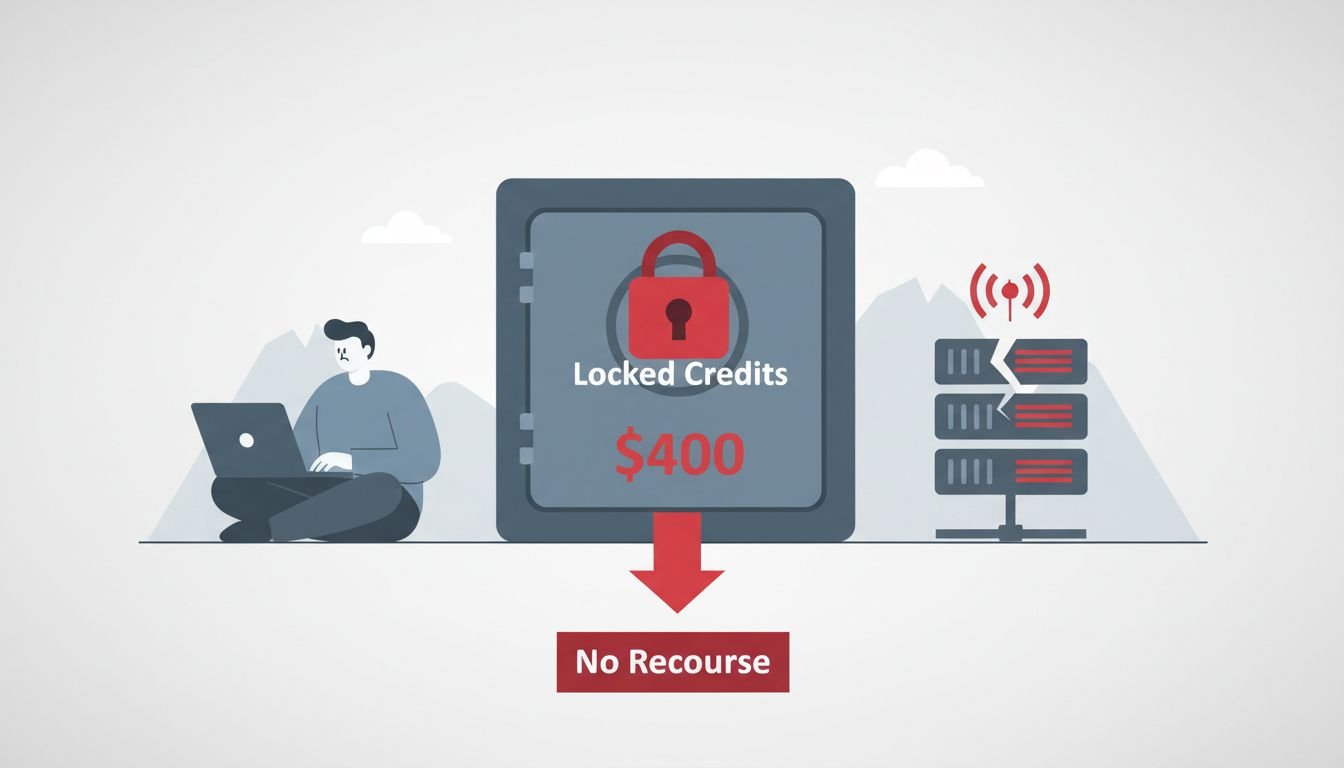
A reseller in a Discord group posted last year that he had $400 locked inside a provider panel that went offline without warning. He had purchased 160 IPTV reseller credits two weeks earlier, activated maybe 30 of them, and woke up one morning to a dead login page and a supplier who stopped responding to Telegram. That $400 was gone. No refund mechanism. No chargeback option because he paid in crypto.
No recourse at all. That scenario is not unusual — it is one of the most predictable failure modes in this business, and it happens specifically because most resellers do not fully understand what they are buying when they purchase credits, what the real risks of that model are, or what alternatives exist. The credit system is the dominant wholesale structure in the IPTV space, so understanding how it actually works at a mechanical level is not optional. It is the foundation of your entire operation.
What IPTV Reseller Credits Actually Are and How the Panel System Works
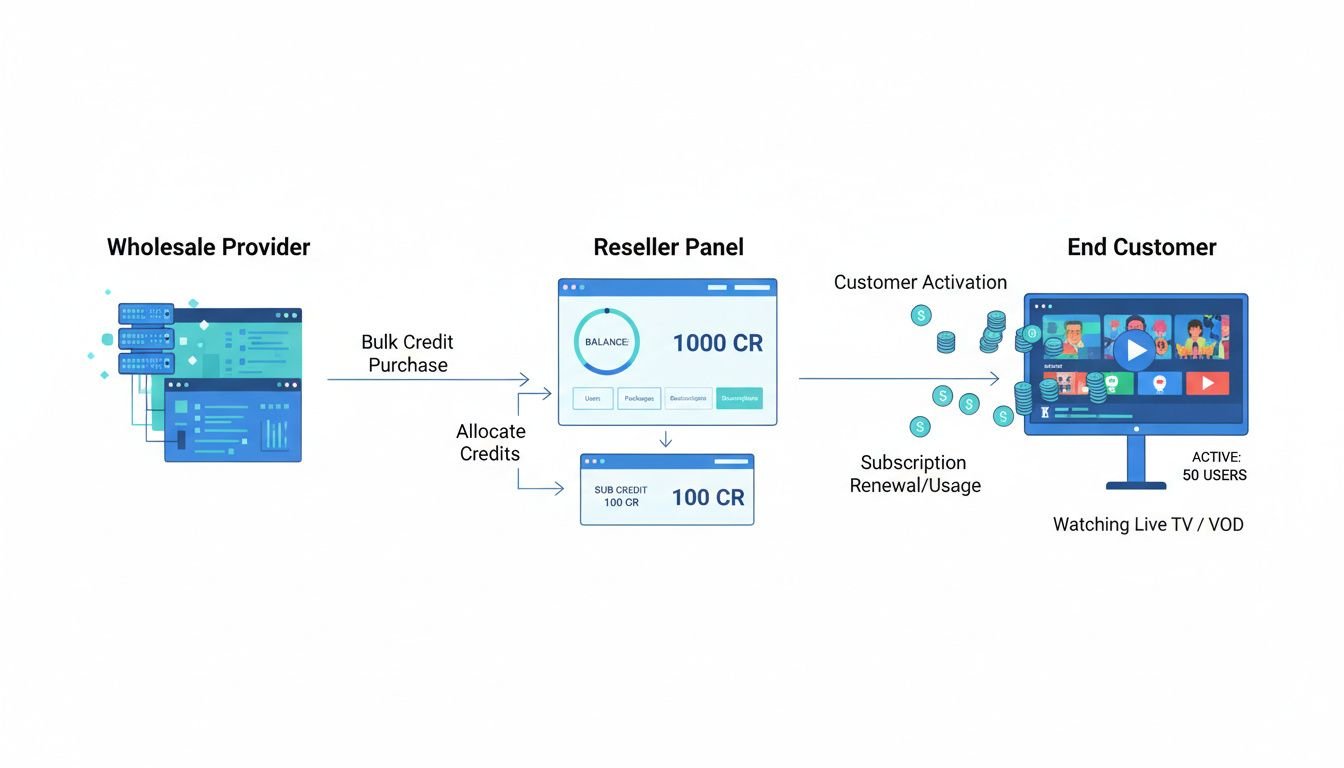
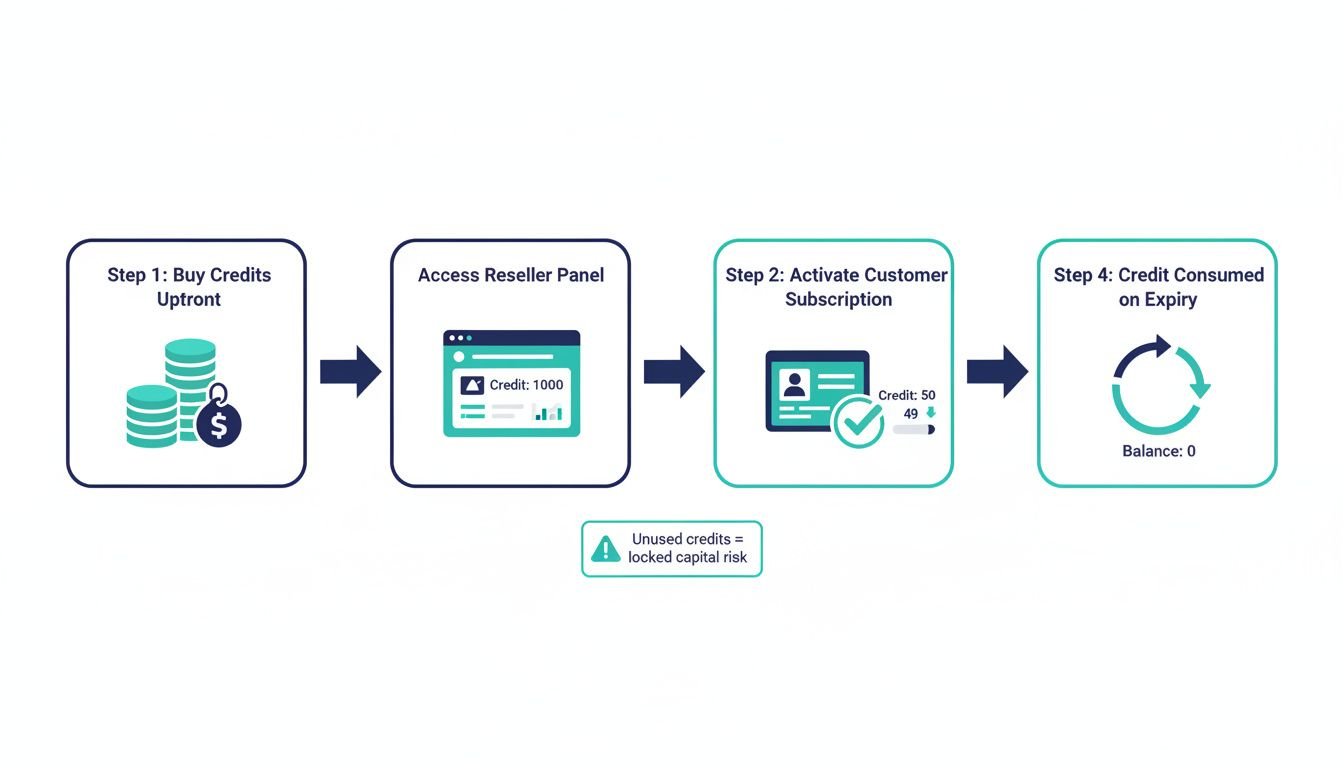
The simplest definition is this: one credit equals one month of one active subscription for one connection. That is the standard unit of exchange between a wholesale provider and a reseller. You buy a block of credits upfront, you log into a reseller panel, and every time you activate a customer subscription, the panel deducts the corresponding number of credits from your balance automatically.
The panel itself is typically a web-based dashboard — usually running on something like Xtream Codes or a proprietary fork of it — where you create customer accounts, assign packages, set expiry dates, and monitor active connections. The provider controls the backend. You control the customer-facing layer. When a subscription expires, the credit has been consumed. If you want to renew that customer, you spend another credit.
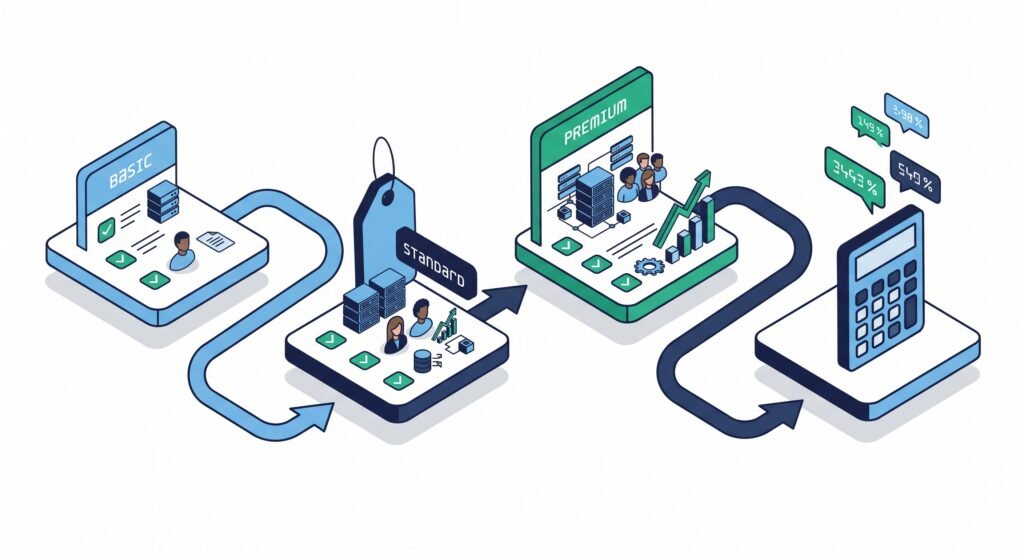
Wholesale pricing on credits varies by volume. Entry-level packages typically start around 5 credits for $60, which works out to $12 per credit. At higher tiers — 100 credits or more — that per-credit cost can drop to $2.50 to $5 depending on the provider and the content package. The retail price you charge customers is entirely up to you. A lot of resellers price single-connection monthly subscriptions between $10 and $20. If you are buying credits at $5 each and selling at $15, that is a 200% markup on the credit cost, but you still have to account for your time, customer support, payment processing fees, and the cost of churn.
Speaking of churn — most new resellers set their price at $10 and hit 40% monthly churn before they understand why. The price is usually not the problem. The problem is that they have not tested reliability before committing customer accounts to a panel, and the first time a channel goes down for 48 hours, half their base does not renew. Before you commit to any supplier at scale, read through how to test an IPTV wholesale supplier before committing — it will save you from the most common early mistakes.
The credit system works well when the provider is stable and the panel stays online. The mechanical simplicity is genuinely useful. You do not have to manage M3U files, you do not have to handle individual login credentials manually, and the panel gives you a clean view of who is active and who has expired. But the simplicity of the interface masks the structural risks underneath it, which we will get into shortly.
Multi-Connection Credits and How Pricing Compounds
One thing that trips up newer resellers is multi-connection pricing. If a single-connection subscription costs one credit per month, a two-connection subscription typically costs two credits per month — not one credit at a slightly higher price. The deduction scales linearly with the number of simultaneous streams you allow per account.
This matters for your pricing strategy. If you are selling family packages or household plans with two or three connections, your credit consumption doubles or triples per customer compared to single-connection accounts. Resellers who do not account for this properly end up with credit balances that drain faster than expected and margins that look worse on paper than they should.
The fix is straightforward: price multi-connection packages as a multiple of your base package, not as a bundled discount. A $15 single-connection plan should translate to a $28 to $30 two-connection plan at minimum, not $20. If you want a cleaner breakdown of how to build these numbers properly, the guide on how to calculate your IPTV reseller profit margin walks through it in detail.
The Capital Lock-In Problem With IPTV Reseller Credits
Here is the risk that nobody in the industry talks about honestly: when you buy a block of credits, that money is fully committed to one provider the moment the transaction clears. There is no escrow. There is no partial refund if you use 30 credits and the provider degrades in quality or goes dark. You are holding a balance inside a system controlled entirely by someone else, and your only leverage is the threat of not buying more.
This is not a theoretical concern. Provider churn in the IPTV wholesale space is significant. Services that are operational today may not be operational in three months — either because of legal pressure, infrastructure failures, payment issues with their own upstream sources, or simply because the operator decides to exit. The resellers who get hurt the worst are the ones who purchased large credit blocks to get the best per-unit pricing and had most of those credits unused when the service went down.
The practical implication is that credit block size should be calibrated to your active subscriber base, not to the discount tier you want to hit. If you have 30 active customers on monthly plans, you need roughly 30 credits per month. Buying 200 credits to get a better per-credit rate means you are carrying five to six months of exposure to a single provider. That is a real financial risk, not a theoretical one.
Some providers offer rolling credit packages or subscription-based access that reduces the upfront commitment. These are worth prioritizing when you are evaluating new suppliers. The per-credit cost may be slightly higher, but the reduced capital exposure is worth it, especially with a provider you have not used for more than a few months. For a structured approach to evaluating suppliers before you commit real money, the guide on how to choose a wholesale IPTV supplier covers the specific questions you should be asking.
Payment method matters here too. Resellers who pay via credit card or PayPal have at least some chargeback option if a provider goes completely dark within a short window. Resellers who pay in crypto — which many providers require — have no recourse whatsoever. That is a meaningful difference in risk profile that should factor into how much you are willing to commit upfront.
What Happens to Unused Credits When a Subscription Expires or a Customer Leaves
This is a practical question that most new resellers do not ask until it costs them money. When a customer’s subscription expires, the credit that was used to activate it has already been consumed. You do not get it back. Credits are spent at the point of activation, not at the point of renewal. If a customer does not renew, that credit is gone — you have already paid for the month they used.
Where it gets more complicated is with trials and early cancellations. Many panels allow you to create trial accounts, and some deduct a credit for each trial even if the customer never converts to a paid subscription. Other panels have a separate trial credit pool or allow free trials up to a time limit. You need to understand exactly how your specific panel handles this before you start running trials aggressively, because a high trial-to-conversion ratio that looks good in theory can quietly drain your credit balance if each trial costs a full credit.
Unused credits in your panel balance — credits you have purchased but not yet assigned to any customer — do expire on some platforms. The expiry terms vary widely. Some providers give credits a 12-month shelf life. Others have no stated expiry but reserve the right to clear inactive accounts. A few providers have been known to quietly reduce balances or change terms without notice. This is another reason to keep your credit balance close to your actual operational needs rather than stockpiling for a theoretical price advantage.
The panel dashboard is where you track all of this, and understanding what you are looking at is non-negotiable. If you are not confident reading your panel’s credit balance, expiry indicators, and connection logs, the guide on how to read your IPTV panel dashboard is worth your time before you scale up.
Credit-Based Panels vs. Alternative Wholesale Structures
The credit panel model is dominant but it is not the only wholesale structure available to resellers. Understanding the alternatives matters because different models carry different risk profiles, different upfront costs, and different operational demands. Treating the credit system as the default without knowing what else exists is how you end up locked into a structure that does not fit your business.
M3U Connection Packs and How They Differ From IPTV Reseller Credits
The main alternative to credit-based panels is a connection-pack or M3U-based wholesale model. In this structure, instead of buying credits that you spend per activation, you purchase a fixed number of simultaneous connections for a flat monthly or annual fee. You distribute M3U playlist URLs or Xtream credentials to your customers directly, and the provider manages the stream count at the infrastructure level rather than through a reseller panel.
The operational difference is significant. With a connection pack, your cost is fixed regardless of how many times customers renew or how many activations you process. Your margin improves as your customer base grows within the connection limit. The downside is that you are paying for capacity whether you fill it or not, and you do not have the same granular per-customer control that a panel gives you.
For resellers who want to explore this model, Lukkystreams offers wholesale M3U connection packs as an alternative to credit panels — it is a legitimate option worth looking at if you want to compare the cost structure against your current credit-based setup. They are direct about what they offer and the pricing is structured for resellers rather than end users.
Neither model is universally better. The credit system gives you more flexibility and per-customer control. The connection-pack model gives you more predictable costs and lower exposure to capital lock-in. The right choice depends on your customer volume, your cash flow situation, and how much operational overhead you want to manage. For a full comparison of how these models differ at a structural level, M3U vs IPTV panel wholesale models compared breaks down the trade-offs in detail.
What matters is that you make the choice deliberately rather than defaulting to whichever model the first supplier you found happens to use. The wholesale structure you operate on shapes your margins, your risk exposure, and your ability to switch providers if something goes wrong.
How to Manage Credit Purchases to Protect Your Cash Flow
The resellers who stay in business long-term are not necessarily the ones with the best supplier relationships or the highest subscriber counts. They are the ones who manage their credit purchases like a financial instrument rather than a convenience. The difference between treating credits as a commodity you stock up on versus a working capital commitment you monitor closely is often the difference between absorbing a provider failure and losing your entire float.
The first principle is simple: never carry more than 60 to 90 days of credit inventory at any single provider. If your active subscriber base consumes 40 credits per month, your maximum comfortable balance at any one provider should be around 80 to 120 credits. Anything beyond that is unnecessary exposure. The per-credit savings from a larger block rarely justify the risk, especially with a provider you have been using for less than six months.
The second principle is diversification. Many established resellers split their customer base across two providers — not because they expect one to fail, but because having all your customers on a single panel means a single point of failure for your entire business. Running two smaller credit balances across two providers costs slightly more per credit on average, but it dramatically reduces the scenario where one bad week wipes out your operation.
The third principle is timing your purchases to match your renewal cycle. If the majority of your customers renew at the start of the month, buy credits in the last week of the prior month. Do not buy credits speculatively two months in advance hoping the price stays stable or that a discount tier holds. Providers change pricing with minimal notice, and a credit block you bought at $5 per unit is not worth more if the provider later drops the price to $3.50 — you are just holding an overpriced balance.
Finally, keep a simple spreadsheet tracking your credit balance, monthly consumption rate, and the date you last purchased. It sounds basic, but the majority of resellers who run into cash flow problems do so because they are managing their credit inventory by feel rather than by numbers. You are running a business. Treat the credit system like the financial instrument it is.
Frequently Asked Questions
An IPTV reseller credit is a unit of prepaid wholesale currency used inside a panel-based system. One credit typically equals one month of one active subscription for one customer connection. You buy credits in bulk from your supplier, then spend them each time you create or renew a customer account inside your reseller panel.
Wholesale credit pricing varies by supplier and volume. Entry-level packs often price credits at $10–$15 each, while high-volume tiers can bring that down to $2–$5 per credit. The per-credit cost drops as you buy more, which is why scaling your customer base directly improves your margin on every subscription sold.
It depends entirely on the supplier. Some providers set a hard expiry date on credit packs, meaning unused credits are lost after a fixed window. Others allow credits to roll over indefinitely. Always confirm the expiry policy before purchasing a large credit pack, as unused credits represent a direct financial loss if they expire.
A credit-based panel ties your wholesale spend to individual customer accounts managed inside a supplier's dashboard. An M3U connection pack gives you a fixed number of stream connections delivered as M3U URLs, which you distribute and manage yourself. The M3U model removes panel dependency and gives resellers more flexibility over delivery and branding.
Yes. If your wholesale supplier goes offline or disappears, any unspent credits in your panel account are typically unrecoverable. This is one of the most significant risks of the credit-based model. Resellers should avoid holding large credit balances with unproven suppliers and always test a supplier thoroughly before committing to bulk purchases. What is an IPTV reseller credit?
How much do IPTV wholesale credits cost?
Do unused IPTV credits expire?
What is the difference between a credit-based panel and an M3U connection pack?
Can I lose IPTV credits if my supplier shuts down?